
District 6 Release Paths
District 6 is a regional juvenile detention facility, not the adult Bannock County jail. A youth may leave under a juvenile-court order, return to a parent or guardian, move to an authorized placement, or transfer to another responsible agency. Public adult custody tools do not identify which event occurred. The person seeking information must have the authority to receive it.
A transfer is continued custody or placement, not a community release. The responsible agency and juvenile court record define the legal path, while the facility handles its own physical custody process. Public silence is expected in this setting and should never be treated as proof of release.
| Question | Correct route |
|---|---|
| Immediate custody or pickup | Facility and authorized parent or guardian |
| Court release authority | Juvenile court or counsel |
| Placement after detention | Responsible juvenile agency |
| Public adult roster result | Not a valid juvenile status source |
Confirm District 6 Release
The official juvenile detention page is the starting point for facility information. There is no promised public name search for released youth. An authorized person should use a direct, limited inquiry and be ready to verify both identity and relationship to the case.
- Contact counsel or the juvenile court for the governing order.
- A parent or guardian should call the facility about an authorized release process.
- Ask the responsible agency about an approved placement or transfer when applicable.
- Do not search the adult Sheriff roster, IDOC adult database, or federal locators as a substitute.
- Keep nonpublic youth details out of public messages and broad records requests.
District 6 Record Limits
Juvenile records do not follow the adult booking-and-release model. Names, allegations, case information, custody status, and placement details may be limited by law or court rule. A public adult-style release log would conflict with the confidential setting described by the county. The facility page therefore gives authorized routes without promising access to a named youth’s record.
The juvenile court owns its filed case record. The detention center and responsible agency own different operational records. Counsel can explain what an authorized party may inspect and what a court order means. Agency staff may confirm a pickup process without disclosing protected case detail to an unrelated caller.
- Release
- Departure under the juvenile authority that governs the youth.
- Placement
- An approved setting that may continue agency oversight.
- Transfer
- Movement to another responsible custodial setting.
- Authorized person
- A person legally permitted to receive the youth’s information.
District 6 Release Timing
No researched official source publishes a fixed daily release hour for this juvenile center. Timing can depend on the court order, responsible agency, approved placement, transportation, and verification of the adult receiving the youth. Security and confidentiality may also limit what can be discussed before an event.
An authorized parent or guardian should follow direct instructions from the facility or counsel. A docket entry may explain the legal decision but does not necessarily record the exact physical departure time. Do not wait at the facility based on an adult jail schedule or an unsourced online claim.
District 6 Adult Search Limits
The Bannock Sheriff app covers the current adult jail roster. IDOC’s Resident/Client Search is an adult state corrections tool. BOP and ICE locators serve separate federal systems. None is a public District 6 released-youth list.
If a case involves another jurisdiction, counsel or the responsible juvenile agency should identify the correct contact. A no-result in an adult tool provides no sound conclusion about juvenile custody. This strict separation protects accuracy as well as privacy.
District 6 Juvenile Services
The county’s juvenile services page gives the regional context for the detention center and its authorized service routes.
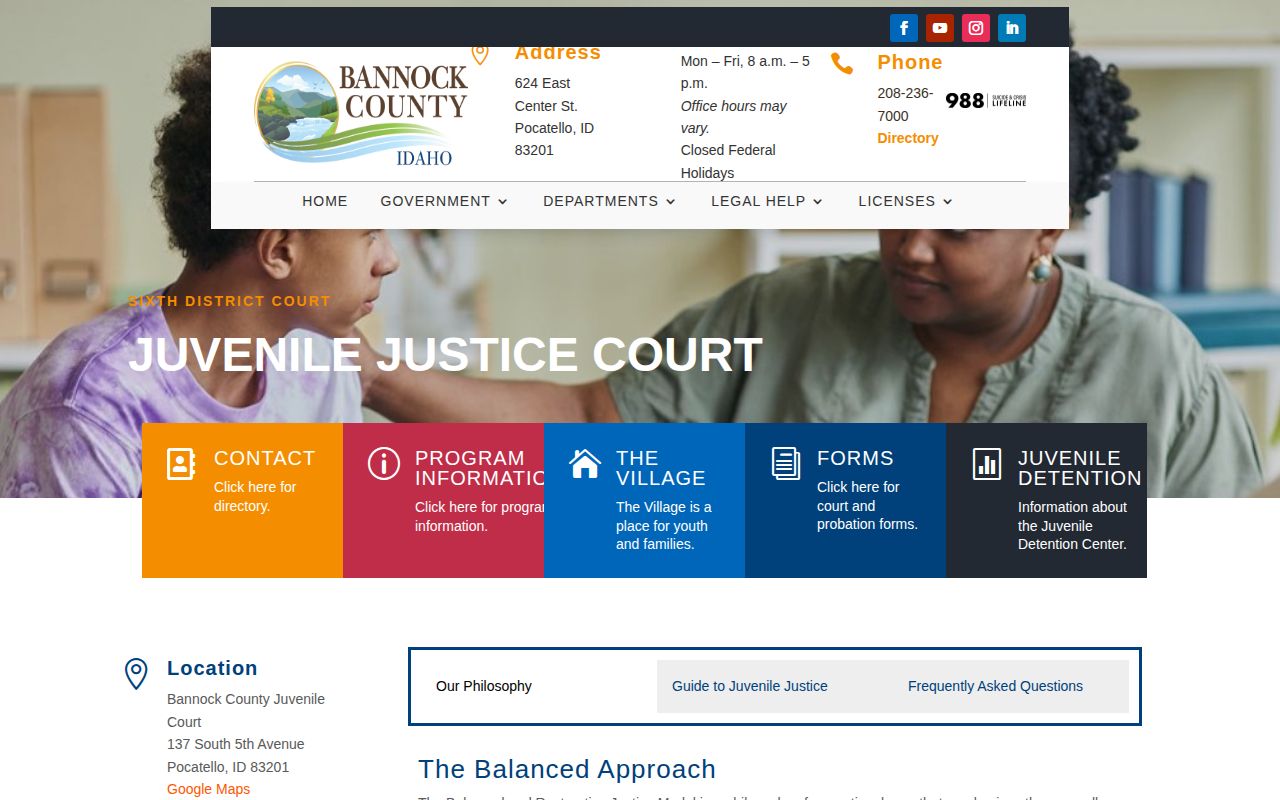
The official image supports routing a youth matter through juvenile services, not through a public adult release search. Regional service does not make protected identities or placements public.
District 6 must also remain separate from PWCC and the planned Pocatello Community Reentry Center. Those are IDOC adult institutions. The Bannock County Detention Center is the adult county jail. Each system creates and protects its own records.
District 6 Authorized Contact
Call only when there is a legitimate connection to the youth or case. Staff may require identity and authority checks before discussing custody, release, pickup, or placement. The public counter and telephone may serve different functions, so seek current directions before visiting.
137 S. 5th Avenue
Pocatello, ID 83201
Mail: P.O. Box 4926
208-235-2300 or 208-235-2316
Official facility page
Provide the minimum information needed. Do not send sensitive youth details through a public or unrelated channel. Counsel and the juvenile court remain the best routes for interpreting an order. A facility telephone confirmation is useful for immediate authorized instructions, while the written order remains the durable source for the legal decision. Keep the two roles distinct.
District 6 Family Routing
The safest sequence is direct: counsel or court for the legal order, the detention center for authorized physical-release steps, and the responsible juvenile agency for placement or follow-up. Each office answers a different question. Calling the adult jail, PWCC, VINE, or a federal locator can create false matches and does not override juvenile confidentiality.
Record the office contacted and the instructions provided, but do not publish a youth’s status. If details conflict, return to counsel or the responsible agency. Accuracy here depends on authority and current case information, not on combining public adult databases.
Note: Juvenile confidentiality still applies when an adult search returns a person with a similar name.
Public Record Search
Sponsored Results